

Most Ordered Replacement Glass Units — Pane Relief Best-Sellers and Why They Sell
These are the replacement double-glazed and triple-glazed unit configurations Pane Relief ships most often to UK customers. The list is curated from twelve months of order data: real configurations, real volumes, the specs that work for most retrofit windows in most UK homes. This page explains what makes each configuration a strong default, where it fits, and where you should diverge from the popular choice and specify something different.
How "most ordered" is defined here
"Most ordered" is a curated label, not a moving real-time chart. We refresh the list quarterly from the Pane Relief order book. To qualify, a configuration must appear in the top quartile of ordered configurations by unit volume over the trailing 12 months, AND in the top half by repeat-customer rate (the proportion of orders placed by a returning customer rather than first-time). The repeat-customer filter excludes configurations that sold well only on one-off marketing pushes; it keeps the configurations that working installers come back for.
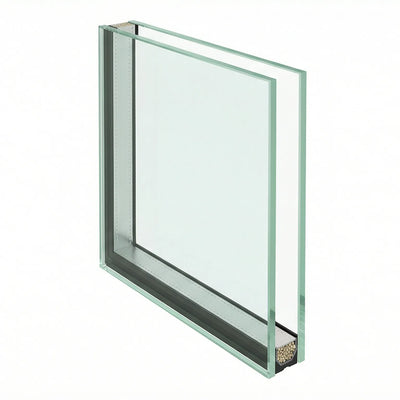
Practically, almost every entry on the current list is a 28 mm overall sealed unit (the dimension your sealed-unit gasket and frame rebate are designed around), with either 4–20–4 or 4–16–4 build-up (two 4 mm glass panes separated by a 20 or 16 mm cavity), low-emissivity (low-E) soft-coat on the inner pane facing the cavity, argon gas fill at 90% or better, and a warm-edge thermoplastic spacer (Super Spacer, Edgetech, or equivalent). This build-up delivers a centre-pane U-value around 1.1 W/m²K and a Window Energy Rating of A when fitted in a thermally-broken frame. It is the closest single configuration to a "UK default" for retrofit replacement.
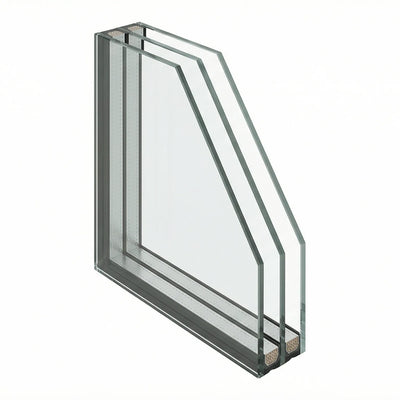
Triple-glazed units appear less often in the most-ordered list, but their share has grown about 8 percentage points year-on-year as Approved Document L tightens and new-build standards reference 0.8 W/m²K for plot-overall calculations. The most ordered triple build-up is 4–12–4–12–4 argon-filled with double low-E coating, giving roughly 0.7 W/m²K centre-pane. We do not push customers to triple where double is adequate; the extra cost only earns back on heated areas with significant glazing-to-floor ratios.
Specifications that the most-ordered units share
The attributes below appear in nearly every entry on the current best-seller list. If you are specifying a new replacement order and you do not have a reason to diverge, these are the defaults that work for most UK homes.
| Predicate | Most-ordered default | When to diverge |
|---|---|---|
| Overall unit thickness | 28 mm (4-20-4 or 4-16-4) | Slim cavity (16-20 mm) for conservation; 36 mm for triple |
| Glass thickness (each pane) | 4 mm | 6 mm for panes > 1.4 m on long edge or where acoustic / safety required |
| Cavity width | 20 mm (16 mm for older rebates) | 14-16 mm for slim conservation; 12 mm for triple build-up |
| Inner-pane coating | Soft-coat low-E (Planitherm Total+ or equivalent) | Double low-E for triple; solar-control coating south-facing |
| Gas fill | Argon at 90%+ concentration | Krypton for slim cavity (under 16 mm) or weight savings |
| Spacer | Warm-edge thermoplastic (Super Spacer, Edgetech) | Aluminium spacer only where heritage spec demands |
| Centre-pane U-value | 1.1 W/m²K (double); 0.7 W/m²K (triple) | Spec to Approved Document L target for the project |
| Window Energy Rating | A (in thermally-broken frame) | A+ or A++ for plot-overall calculations on new build |
| Acoustic Rw | ~32 dB | 38-45 dB for urban / transport corridor |
| Safety classification | None (annealed) | Toughened or laminated where Approved Document K applies |
| Edge seal | BS EN 1279-1 to -6 dual-seal | Always (no reason to diverge) |
| Lead time | 5–7 working days | 10–14 working days for triple, toughened or laminated |
The current best-seller list
The list below reflects the current most-ordered-units collection. The order is curated by the Pane Relief ops team based on trailing 12-month order volume and repeat-customer share.
Who buys these configurations
Homeowners — like-for-like replacement of a misted unit
The single largest segment buying our most-ordered configurations is homeowners replacing a misted or seal-failed unit one window at a time. The misted-unit job is constrained by what the existing frame rebate will accept; the homeowner usually does not have the option to thicken the unit or change the cavity width without re-fitting the frame. In practice this means a 28 mm 4–20–4 or 24 mm 4–16–4 like-for-like, low-E coated, argon-filled. The popular configurations are popular because they fit the rebates uPVC frame manufacturers have been using since around 2005. If your frame is older than 2000 and originally took a 20–24 mm unit, the slim configurations on our conservation glazing page may suit better.
Installers — stocking the spec their customers ask for
FENSA-registered installers running residential replacement books order the most-ordered configurations because their own customers ask for "A-rated double glazing", "argon-filled", or simply "the standard one". Installers buy the 28 mm 4–20–4 low-E argon build because it is the unit that satisfies the customer-facing energy rating, fits the frame rebate they are most often working with, and clears Approved Document L on a like-for-like replacement. Trade pricing on the most-ordered configurations is the most aggressive in the range because the volume justifies it; one-off bespoke shapes earn less margin and carry more lead-time risk. See trade and bulk glazing for account terms.
Builders and developers — new-build and refurb at plot scale
Builders ordering at plot scale (10–50+ units to a single site) tend to spec slightly different from the homeowner default: thicker glass on south-facing elevations (6 mm outer pane for solar-gain and impact resilience), upgraded low-E on north-facing elevations to claw back the U-value lost to fewer hours of solar gain, and triple glazing on plots targeting Future Homes Standard or Passivhaus performance. The most-ordered "developer spec" is rarely the same as the most-ordered "homeowner spec" — the developer trades unit-cost for whole-house performance compliance. Plot-scale orders run through the Tier 2/3 trade pricing path with framework supply where appropriate.
Popular spec vs cheapest spec vs premium spec
The most-ordered spec is the default for a reason — but it is not the only choice. The table below sets it alongside the cheapest viable spec and a premium spec so you can see the trade-off.
| Attribute | Cheapest viable | Most-ordered (default) | Premium |
|---|---|---|---|
| Build-up | 4-16-4 air-filled, hard-coat low-E | 4-20-4 argon-filled, soft-coat low-E | 4-12-4-12-4 triple, krypton, double low-E |
| Centre-pane U-value | ~1.6 W/m²K | ~1.1 W/m²K | ~0.5 W/m²K |
| Window Energy Rating | C / D | A | A++ |
| Approved Doc L compliance (replacement) | Yes (just) at 1.4 W/m²K whole-window | Yes, comfortably | Yes, comfortably |
| Weight per m² | ~20 kg | ~22 kg | ~30 kg |
| Indicative price index | 0.80 | 1.00 | 1.95 |
| Lead time | 5–7 working days | 5–7 working days | 10–14 working days |
The cheapest viable spec saves roughly 20% but trades roughly 0.5 W/m²K of U-value and the Window Energy Rating drops two grades. For a homeowner replacing one misted unit, that price difference is rarely worth chasing — the unit performance is on display for the next 20 years. For an installer pricing a quotation, the cheapest viable spec exists mostly as a "we can go lower if you need" option, not a default. The premium triple-glazed spec almost doubles the cost; it earns back on whole-house heating bill over a 10-year horizon on a property with high glazing-to-floor ratio, less reliably on a typical 1990s semi.
Standards and references for popular replacement specs
The standards, certification schemes, and regulatory references below underpin the spec defaults on our most-ordered configurations.
- BSI Group — publisher of BS EN 1279-1 to -6, the European standard for sealed insulating glass units. Every Pane Relief sealed unit is manufactured and tested against this standard.
- FENSA — installation by a FENSA-registered firm self-certifies compliance with Approved Documents K and L. The most-ordered configurations are spec'd to clear FENSA self-certification straightforwardly.
- Glass and Glazing Federation (GGF) — publishes the Glazing Manual and technical bulletins on spec selection, including guidance on like-for-like replacement and the rebate dimensions common across UK frame manufacturers.
- Approved Document L — Conservation of fuel and power — the statutory U-value floor for replacement glazing in dwellings. Currently 1.4 W/m²K whole-window for existing dwellings in England; lower for new build.
- Approved Document K — Protection from falling, collision and impact — safety-glass requirements for critical locations. Influences whether the most-ordered annealed default is acceptable or whether the spec must be upgraded to toughened or laminated.
- Planning Portal — consolidated guidance on Approved Document Q (Security in dwellings) and conservation areas, both of which can push the spec away from the popular default.
- British Board of Agrément (BBA) — third-party certification for proprietary spacer and warm-edge systems used in our most-ordered build-ups.